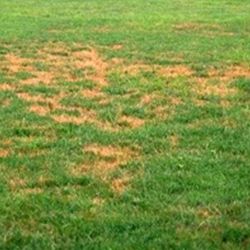
Water is vital for a lawn to grow green and healthy, but your grass can get too much of a good thing. Too much rain can cause damage and diseases in your lawn.
If the soil under the grass becomes oversaturated with water, it can prevent oxygen from moving through it quickly to the roots. This can cause the roots to die. The situation will become even worse as the temperatures get warmer.
After three days of being oversaturated, grass can become weakened. Weakened grass is more susceptible to insects and diseases. After it stops raining and the lawn begins to dry out, you may see irregular brown spots amid the green. This happens because water damage kills weaker plants before healthier ones.
If your lawn is completely flooded, it is likely that the grass is injured. If the ground dries out but the grass does not turn green, you may need to reseed or resod areas that are damaged. You may have to wait until fall, when the weather conditions are better.
Gray leaf spot is a disease that is common in lawns with compacted soil that have excess nitrogen from fertilizer. It thrives in hot weather with excess moisture. Gray leaf spot can cause gray spots on leaf blades surrounded by a brown border. Entire blades can eventually die and thin out the lawn. You can avoid gray leaf spot by not using nitrogen fertilizer or herbicides on affected areas and not watering your lawn in the afternoon. If you suspect an area has gray leaf spot, mow it last to avoid spreading the disease.
Pythium root rot also occurs in hot and wet weather. Grass blades change color and become thinner, and the roots change color and lose the hairs needed for growth. Pythium root rot will usually not kill a lawn unless it is saturated for a long period of time. You can prevent the disease by mowing your lawn regularly and watering it even after it rains to maintain healthy roots.
Take-all root rot occurs after periods of heavy rainfall. It affects the root system in a way similar to Pythium root rot, but grass turns short and black and thins. It usually affects areas 3 to 15 feet in diameter.
The only way to avoid these diseases is to minimize stress on the roots. Mow the grass to an appropriate height, avoid scalping it, and use a fertilizer with equal amounts of potassium and nitrogen frequently in small amounts.

